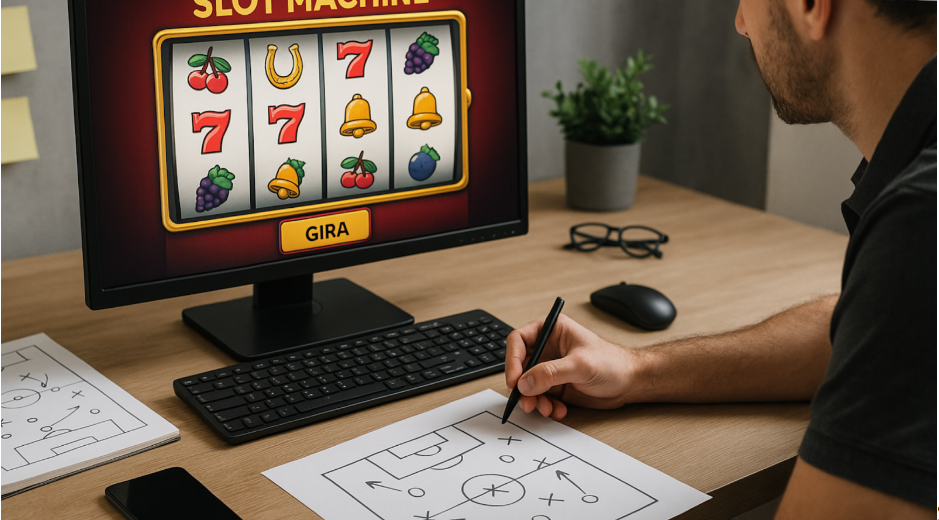
It’s funny, really, football management and slot machine design might seem like they don’t have much in common, at least at first glance. Still, both lean heavily on tactics and some form of structured decision-making (even if, to be honest, they come at it from rather different directions). Coaches spend hours combing through match footage, juggling lineups, chasing that elusive edge.
At the same time, designers fuss over data models and player behavior stats, hoping to craft a game that pulls people in and keeps them spinning. What counts as pressure feels different in each world; in football, it’s instant, real time, no take-backs. With slot machines, there’s this cycle of launch, gather feedback, tweak, repeat.
Data, gut instinct, quick calls, they all play into the action on either side, but not always at the same speed or level of risk. And yet, as tech keeps seeping further into both fields, lines continue to blur. These days it’s not rare to see a coach borrowing an idea from the gaming industry, or vice versa, hoping to get just a bit more out of every move.
Tactical analysis in football management
Anyone who’s peeked behind the curtain in modern football knows how overwhelming the sheer amount of information can be: match replays from every angle, location trackers sewn into jerseys, endless logs of every pass or foul. The real aim of tactical analysis is to sift through all that mess and spot whatever patterns might be hiding, something to adjust in the next drill, maybe a new formation, a small role tweak.
Coaches don’t exactly stick to one script; chasing a late goal could see a quick switch from a 4-3-3 to 3-5-2, usually on the fly and often guided by live feeds or the latest analytics dashboards. Catapult (they’re big in the field) has reported that, honestly, it’s tough to find a top-tier club that isn’t leaning heavily into software for scouting out weaknesses in every opponent.
Most of these decisions, by the way, aren’t just a pre-match thing. They trickle throughout the week, sometimes filtering down through machine learning predictions that point to an exposed defensive flank, sometimes bubbling up from years of pure intuition on the bench. Quick judgment calls in the heat of a match? Those rarely feel purely scientific, there’s always some blend of raw numbers and hawk-eyed gut feeling from someone who’s lived the touchline.
Structured design decisions in online slots
To be fair, if you zoom into how slot games get made, you’ll notice a surprising echo of that obsession with analysis, though the landscape is quite different. Creative leads and mathematicians sit together, puzzling over spreadsheets and sketches, trying to enhance player retention or (more quietly) meet whatever the latest regulatory line spells out.
The design process generally starts off with the usual: a messy round of brainstorming, maybe a bit of market scouting, and plenty of “what if?” discussions, before it gets funneled through prototypes and statistical drills. For online slots, internal metrics like Return to Player and frequency of play are modelled extensively, often across tens of thousands of simulated spins.
There are softer influences, too, trendy new features, shifting expectations, new mechanics drifting over from other games. Tuning, if you’ve ever watched it up close, can get almost obsessive; detailed spreadsheets, proprietary algorithms, reward timing, near-miss visuals, particular audio cues, it all gets debated and adjusted for the chance to make players stick around just a little longer.
The use of psychological tricks isn’t an accident; much of it is about steering people towards a kind of deep focus, pursuing repeated jolts of anticipation. Once the game is out in the wild, the rapid update loop kicks in, exploring changes in how people actually play, and then feeding those findings straight into the next update. If regulators or players react in ways no one planned for, well, that simply gets folded into the next wave of tweaks.
Divergent objectives and shared methodologies
So, where does all that effort actually point? In football, the bullseye is pretty clear: score more goals. Get promoted, stay up, take the trophy, pick your ambition. But with slot games, the needle usually aims for player engagement: holding eyeballs, nudging session length, and (it has to be said) growing bottom lines for operators. That’s not to say the means don’t overlap; both draw heavily on repeatable processes.
Video breakdowns, wearables, models, it’s all in the manager’s arsenal. On the slots side, the same relentless pursuit shows up as engagement stats, tracking user flows, carving up demographics to squeeze out new game tweaks. Where things diverge in a big way is the tempo. Football managers have, sometimes, a split second to swap out a scheme.
Game developers move slower, gathering weeks of real-world play before making a single change. Oh, and let’s not forget the shared psychology angle: locker-room speeches and clever bonus systems aren’t so far apart, at least in theory. Industry surveys, like the one from Rise Up Labs in 2023, suggest more than 70% of big-name studios now chase the same type of analytical fine-tuning seen in top-level sports, though results, as ever, vary.
The role of technology and psychological insight
There’s been a noticeable shift, especially over the past decade or so, technology and psychological research now quietly shape a lot more of what goes on behind both scenes. In football, wearable tech and tracking kit churn out millions (literally millions) of data points in a typical high-stakes match. Some technical write-ups mention as much as eight million per game, which is… well, a staggering number, if you really think about it.
Coaches now lean on machine learning models to get a sense of how play is likely to unfold, or to push new tactical ideas while a match is actually in progress. On the digital casino side, before a slot game even reaches players, there’s a whole stage where engagement algorithms run forty, fifty thousand simulated test sessions, sometimes more, all in the hope of fine-tuning that delicate balance between payout and player retention. Both sides thrive on fast feedback: coaches poring over game reviews each Monday, designers glued to live analytics as play styles evolve or sudden player drop-offs get flagged.
Underneath it all, psychology is pulling strings, whether that’s keeping a football squad feeling tough and focused, or nudging a player toward one more spin through unpredictable rewards and streak systems. There’s little denying that tactical thinking and psychological savvy keep crisscrossing paths, no matter what kind of “game” we’re actually talking about. Check out the 2203 trend reports for more insights into these strategies.
Choosing wisely and gambling responsibly
When it comes to slot game design, there’s no hiding the fact that behavioral psychology is harnessed quite intentionally to keep people playing. Of course, there’s a line: crafting innovative, entertaining products matters, but transparency, and the actual wellbeing of the player base, probably ought to come first.
Responsible gambling these days is typically defined by measures like plain explanations, easy-to-find spending limits, as well as offering help for those who might find things getting out of hand. The advice: set boundaries, know the real odds at play, and treat online slots as entertainment, not a shortcut to riches.
Various best practices, self-exclusion programs, tighter oversight from gambling authorities, try to keep things safe, though their effectiveness isn’t always clear-cut. As developers and analytics teams keep searching for the next leap forward, holding onto a foundation of player welfare seems, if not universally achieved, at least widely agreed upon as a goal worth keeping in focus.